





Introduction: Prato della Valle, a sprawling urban stage and a frame of history
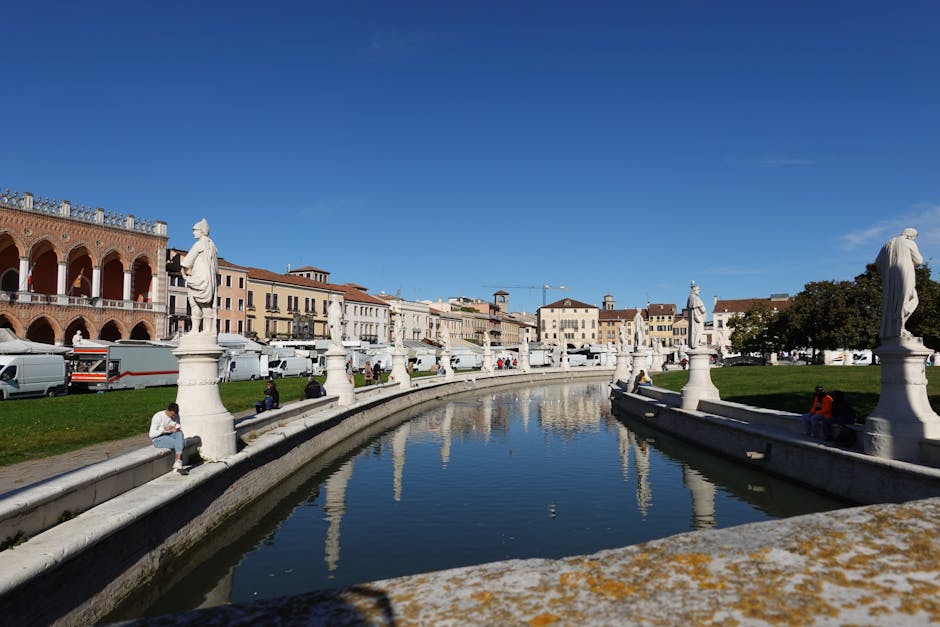
At the heart of Padua (Padova), a university city steeped in art and faith, lies one of Europe’s most spectacular squares: the Prato della Valle. More than just an open space, this expansive elliptical green — roughly 900 meters long by 750 meters wide — functions as a genuine urban oasis where history, everyday life and local rituals meet. Encircled by a canal lined with 78 stone and bronze statues, the Prato della Valle forms an open-air theater where walkers, students, street performers and families gather from dawn until dusk. Its distinctive silhouette — a central island called Isola Memmia (or Isola di Prato della Valle) surrounded by a ring of statues — gives the place a geometry that feels both ancient and modern, perfect for anyone wanting to grasp Padua’s spirit in a single stroll.
The history of the Prato della Valle is equally fascinating: reshaped over the centuries, it has been a marsh, a fairground, a military arena, and since the late 18th century a monumental square envisioned by Senator Andrea Memmo. The statues that line the perimeter are more than mere decorations; they represent notable figures — jurists, scholars, bishops, patrons — whose lives helped build Padua’s intellectual and spiritual reputation. The energy of the place comes from the convergence of heritage, conviviality and nature: welcoming lawns, little bridges spanning the canals, centuries-old trees, and cafés along the surrounding streets. Prato della Valle is thus a landmark for visitors wanting to dive into historic Padua while enjoying a lively, accessible setting.
For the curious traveler, visiting Prato della Valle is easy to plan: it’s just minutes on foot from Padova train station (Stazione di Padova) and close to major sites like the Basilica di Santa Giustina, the famous Orto Botanico dell’Università di Padova (the world’s oldest university botanical garden), and the Scrovegni Chapel (Cappella degli Scrovegni) with Giotto’s frescoes. The cafés and small trattorie on the adjoining streets provide the perfect culinary prelude after an outdoor walk. But beyond the picture-postcard charm, Prato della Valle invites reflection: how can a single piazza condense centuries of history, urban policy and popular practices into one space?
This guide offers a comprehensive, practical exploration of this unique site: how to get there, must-see curiosities, nearby monuments to visit (addresses, opening hours, prices), tips for the best times to go, photo ideas, and local tricks to make the most of this vast historic garden. Whether you’re an amateur photographer chasing perfect sunset light, an art history student fascinated by the statues and the urban layout, or a casual stroller looking for a green break during a trip through the Veneto, Prato della Valle is a can’t-miss meetup. Let’s set off on an immersive, step-by-step discovery of this oasis and its thousand open-air stories.
History, architecture and symbolism: understanding the monumental islet
Prato della Valle is remarkable not only for its size but as a palimpsest of functions and urban interventions. Before taking its current shape, the area was for centuries a marshy ground outside Padua’s medieval perimeter. It wasn’t until the 18th century that Senator Andrea Memmo undertook a major transformation, inspired by neoclassical trends and the period’s fondness for public promenades. The idea of a central island surrounded by a canal and lined with statues came from the urban principles of the time: to create a place that was both useful and beautiful, where civic memory and municipal power could be displayed.
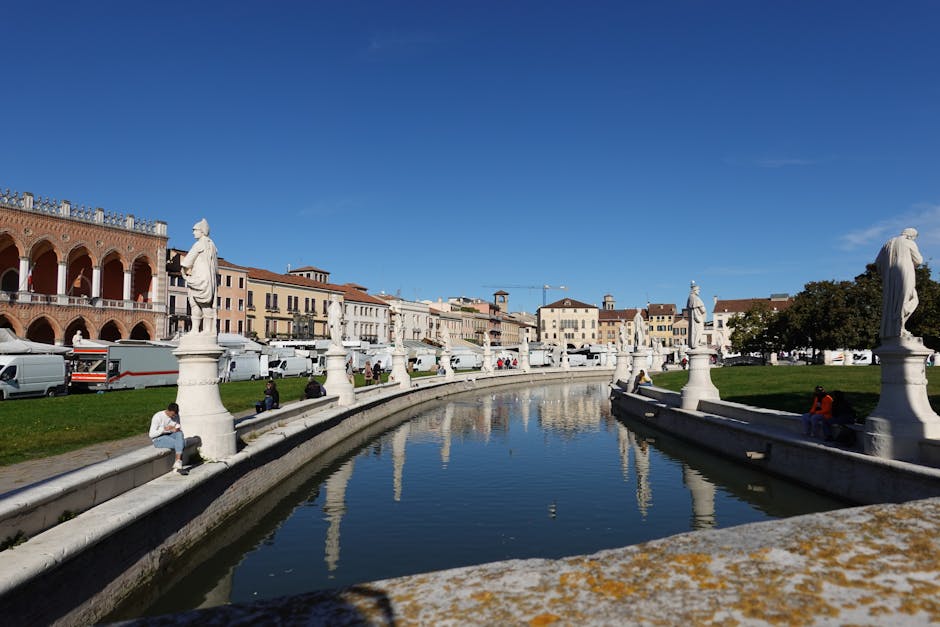
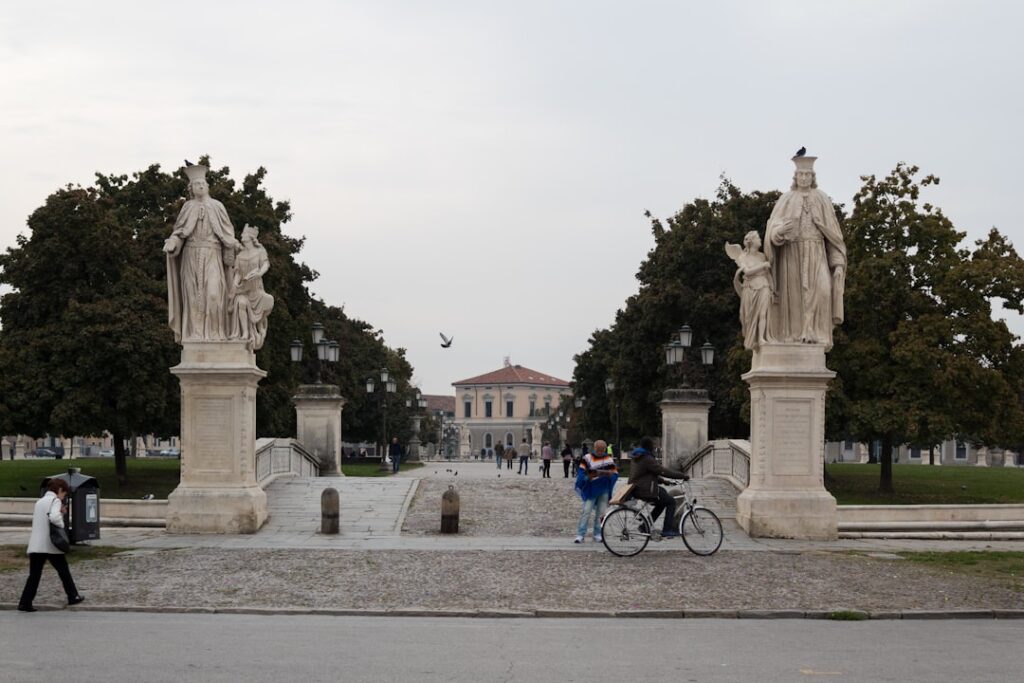
The most striking feature is the Isola Memmia (the island in the center of the square), accessible via four bridges that connect the islet to the surrounding walkways flanked by two pedestrian lanes. Around the elliptical rim, 78 statues represent Padua’s and Venice’s « illustrious citizens » — scholars, politicians, religious figures and cultural personalities. These sculptures, made by various artists between the late 18th and 19th centuries, form an open-air museum: each has its own story, often with a plaque, inviting visitors to follow an almost educational path. It’s a tangible way to read Padua’s civic identity through its local heroes.
The surrounding architecture adds greatly to the site’s charm. To the east, the imposing profile of the Basilica di Santa Giustina dominates the skyline; a few steps away are university buildings and historic palaces like the Palazzo del Bo (the old university) and Palazzo Moroni. The presence of these buildings makes Prato della Valle a junction between the sacred, the scholarly and the everyday. The space also changes with the seasons: in spring the lawns bloom and students spread out to study; in autumn, low light brings out the statues’ reliefs and creates intimate reflections in the canal.
Symbolically, the circular layout and the ring of statues recall ancient amphitheaters where civic and moral values were celebrated. The choice of figures to be sculpted reflects Padua’s elite taste for public tribute and memory. Memmo’s project, while aimed at beautifying the city, was also a political statement: a gesture to affirm Padua’s stature within the broader context of the Venetian Republic and later amid European political shifts. Today the square maintains that dual role: leisure space and showcase of local identity, hosting festivals, markets and celebrations.
Visiting and admiring: what not to miss around Prato della Valle
A visit to Prato della Valle pairs perfectly with several nearby landmark sites. Here’s a selection of monuments and points of interest within walking distance, with addresses, opening hours and practical information to help you organize your day.
- Basilica di Santa Giustina
Address: Piazza Santa Giustina, 14, 35142 Padova PD, Italy.
Opening hours: generally open daily — morning 7:30-12:00, afternoon 15:00-19:00 (times may vary depending on liturgical celebrations).
Price: free entry (donations accepted for upkeep).
Description: a vast basilica built over the relics of the martyr Santa Giustina; its imposing nave, side chapels and works of art are worth a visit. Don’t miss the marble floor, the grand high altar and the collections of sacred art. The basilica sits less than 200 meters from the northern corner of Prato della Valle, making it an immediate stop after a walk around the square. - Orto Botanico dell’Università di Padova
Address: Orto Botanico, Via Orto Botanico, 15, 35121 Padova PD, Italy.
Opening hours: usually open Tuesday to Sunday, 9:00-18:00 (times vary by season).
Price: around €6 for adults (reduced rates for students and seniors; free for children under 6).
Description: founded in 1545, it is the oldest university botanical garden still in operation. The Orto houses historic greenhouses, medicinal plants and rare collections. Its atmosphere is both scientific and poetic — ideal for continuing a morning of exploration after Prato. - Palazzo della Ragione
Address: Piazza delle Erbe, 35122 Padova PD, Italy (historic center, about 15-20 minutes on foot).
Opening hours: generally 9:30-19:00 (closed some holidays; check before you go).
Price: around €10 (indicative; reductions available).
Description: located on the Piazza delle Erbe, this medieval palace features a large market hall crowned by a spectacular wooden roof and decorated with frescoes. The building testifies to Padua’s economic and judicial role in the Middle Ages and Renaissance.
Linking these visits allows you to connect the expansive public space of the Prato with the deep history of the city’s religious and academic institutions. For each site, it’s a good idea to check official times on institutional websites or with local tourist offices — especially in case of religious events (basilica) or temporary exhibitions (Palazzo della Ragione, Orto Botanico).
Practical tips: getting around, best times, photos and local insider tips
Getting to and moving around Prato della Valle is straightforward, but a few tips will make your visit smoother and more enjoyable. Here are practical suggestions to optimize your walk and discoveries.
Access and transport:
- From Padova train station (Stazione di Padova), located at Piazza della Stazione, 35131 Padova PD: the square is reachable in a 15–20 minute walk (about 1.2 km), or by local bus (several lines stop nearby). Taxis and bike-sharing services are also available outside the station.
- If you’re coming by car, several public parking areas are located in the historic center (Park S. Sofia, Park Prato della Valle) — typical prices: €1.20–€2.50/hour depending on the zone. A practical nearby parking address is Via S. Francesco, 35121 Padova. Watch out for ZTL (limited traffic zones) in the center: follow signs carefully to avoid fines.
Best time to visit and timing:
- The most pleasant months to visit are April–June and September–October: soft light, moderate temperatures and flourishing vegetation.
- For photography, aim for the golden hour at sunrise or sunset: the low light highlights the statues and creates beautiful reflections on the central canal.
- The Prato is busy throughout the day; for a quieter experience, go early on a weekday morning.
Photo tips and angles:
- Use the bridges to compose shots with the canal in the foreground and the row of statues receding into perspective.
- The façade of the Basilica di Santa Giustina makes a dramatic backdrop for portraits and group photos.
- On market days or during events (outdoor exhibitions, concerts), capture the social buzz that animates the square.
Local secrets and customs:
- The lawns are much-loved by students: soak up the studious atmosphere but respect restricted areas where public access is limited.
- There are many café terraces on the adjacent streets: stopping for a proper Italian espresso along Via Orto Botanico after your visit is a recommended ritual. Expect about €1.10–€1.50 for an espresso at the counter; table service can cost €2–€4.
- If you like markets, check with the local tourist office (IAT Padova, Piazza Capitaniato, 35139 Padova PD) for dates of weekly markets and flea markets that sometimes take place in or near the Prato.
Events, entertainment and local life: how Prato della Valle comes alive
Prato della Valle is a versatile gathering place; it constantly transforms with the hours and the seasons. The square regularly hosts cultural events, markets, open-air concerts, food fairs and university activities. Here’s an overview of typical happenings and tips to enjoy them.
Regular events:
- Markets and fairs: depending on the municipal calendar, Prato sometimes hosts craft markets and flea markets, especially in spring and autumn. These are great opportunities to discover local products, ceramics, old books and handmade items. Times vary, but weekend mornings (9:00–14:00) are most common.
- Concerts and performances: in summer, the square can turn into a stage for free concerts and cultural events organized by the municipality or local associations. These evenings are often announced on the Città di Padova website and on municipal notice boards.
- Student events: close to the academic heart of the city, Prato is a meetup spot for student activities, gatherings and academic celebrations, especially at the beginning of the school year and during graduation season.
Practical tips for attending events:
- Check Padua’s cultural calendar (official website and the municipality’s Facebook page) for dates, times and any tickets required.
- Arrive early for popular events: finding a spot on the lawn or a table at a terrace becomes difficult during summer evenings.
- For concerts, bring a small blanket or a warm layer for the evening; temperatures can drop quickly, especially in spring and autumn.
Local life and interactions:
Beyond one-off events, the essence of Prato della Valle is revealed through daily life: early-morning joggers, parents with children, solitary readers, street artists and small vendors. It’s a democratic space where all generations mix. If you watch closely you’ll notice local habits: conversations in the Venetian dialect, professors chatting after a symposium, or fathers teaching children how to weave between statues and bridges. Respect these everyday moments: avoid stepping onto freshly maintained grass and be discreet during religious celebrations around nearby churches.
Suggested itinerary: a half-day around Prato della Valle
Here’s a suggested itinerary to get the most out of a 4–5 hour visit combining nature, art and local cuisine without rushing.
- 09:00 – Start at Prato della Valle: Begin with a circular walk of the ellipse. Take time to spot statues that catch your eye and read their inscriptions. Recommended photo from the southwest bridge with a view of the Basilica di Santa Giustina. (Free, open 24/7)
- 10:00 – Visit the Basilica di Santa Giustina: 3 minutes on foot. Enjoy the peaceful interior and side chapels. Duration: 30–45 minutes. (Free entry)
- 11:00 – Coffee break: Head to Via Giotto or Via Orto Botanico for an espresso and a cornetto. Price: espresso €1–€1.50; cornetto €1–€2.
- 11:30 – Orto Botanico dell’Università di Padova: 10–12 minutes on foot; allow about 1h30 to visit the greenhouses and historic paths. Indicative price: €6 per adult.
- 13:00 – Lunch: Choose a local trattoria like Trattoria al Prato (example dishes: risotto, cicchetti, homemade pasta); average budget €12–€20 per person for a simple meal.
- 14:30 – Palaces and nearby museums: Depending on your interests, stroll to Palazzo della Ragione and the historic center. Visit the palace and its frescoes, duration about 1 hour. Indicative price: around €10.
This route can be adjusted depending on the season and site availability; for example, swap the Orto Botanico for the Scrovegni Chapel if you’ve booked in advance (advance reservation required for the chapel). Bring a water bottle, sunglasses in summer and a small umbrella in case of a sudden shower.
Conclusion: Prato della Valle, Padua’s mirror and an invitation to slow time
Prato della Valle is more than a large square: it’s an urban manifesto, a stage where Padua’s history and its relationship with public space and memory play out. Crossing its bridges, walking along its canal and observing rows of statues, visitors travel through eras and local lives. By its size and layout, the place reminds us that public spaces can remain spots for breathing, learning and sharing, even within a dense, history-rich historic center.
Beyond the strictly tourist facts — monuments, addresses, opening hours and prices — Prato della Valle is also a social laboratory: it hosts daily rituals, student celebrations and cultural events that mark Padua’s rhythm. The square is largely accessible to everyone, free of charge, and offers a privileged observational ground for anyone wanting to catch Padua’s calm yet alert spirit. The practical tips above will help you plan a rich, relaxed visit: favor the soft morning or sunset hours, check official times for nearby monuments, and enjoy the simple pleasure of a café on a terrace after a long walk.
Finally, let yourself get drawn in by the details: a commemorative plaque on a statue, a student lying on the grass, a family feeding ducks in the canal, or a street vendor slowly packing up his stall. These small scenes, often missing from postcards, are what make Prato della Valle lively and memorable. Whether you spend an hour or a full day there, the square will give you a complete and shifting portrait of Padua — a city where past and present converse beneath the open skies of one of Italy’s most beautiful piazzas.