





Introduction: Tracing Giotto in Padua
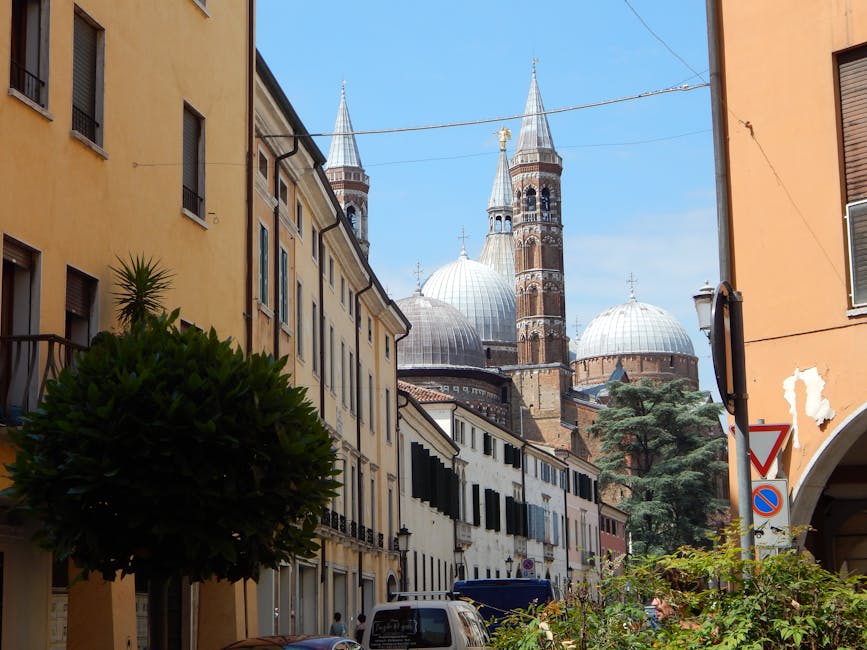
Padua reads like a picture book where every street, church and corner tells an essential page of Western art history. At the heart of this medieval university city, a modest chapel — the Cappella degli Scrovegni (the Scrovegni Chapel or Arena Chapel) — houses a treasure that forever altered the way painting is conceived: the fresco cycle painted by Giotto di Bondone in the early 14th century. Following Giotto’s trail in Padua, the traveler doesn’t just visit monuments; they walk through the birth of modern painting — a moment when space, light, emotion and dramatic storytelling found a new pictorial language.
This article is designed as a guide that’s historical, practical and sensory. It blends precise information (full names of sites, exact addresses, opening times and prices) with immersive descriptions of the frescoes, tips to make the most of your visit and walking routes around the most significant sites. Whether you’re an art lover, an art-history student, or simply a curious traveler wanting to understand why a small chapel in Padua became a turning point, this guide will walk you through it step by step.
Giotto is no longer just a name in textbooks: in Padua his painting is written across the very walls of the Scrovegni Chapel, where scenes from the Life of the Virgin and the Life of Christ form a dramatic whole of extraordinary power. The figures come alive, gestures speak, glances answer one another, and the illusion of space is achieved by means never seen before. But Giotto’s presence in Padua doesn’t end with the chapel: traces, fragments and the influence of his style can be found in the Museo Civico agli Eremitani, in the halls of the Palazzo della Ragione and even in the popular devotion at the Basilica di Sant’Antonio di Padova.
In the pages that follow, we’ll detail how to book your visit to the Cappella degli Scrovegni, what to look for in each scene, how to complement the discovery with other Padua sites connected to Giotto and his legacy, and finally how to experience this responsibly (conservation rules, the photography ban, best practices). We’ll pepper the guide with practical tips — transport, hours, prices in euros, exact addresses — to turn your stop in Padua into a true immersion in the art that changed the world. Pack your notebook, curiosity and walking shoes: Padua is a city to be seen and felt as much as to be described.
The Cappella degli Scrovegni: Giotto’s workshop-theatre
Address and access: Cappella degli Scrovegni, Piazza Eremitani, 8, 35121 Padova PD, Italy. The chapel sits a stone’s throw from the Museo Civico agli Eremitani and the Prato della Valle; it’s well served by local transport and is usually reached on foot from the central train station (Padova Stazione, about 2 km away).
Opening hours and tickets: the Cappella degli Scrovegni operates on a strict timed-entry system to protect the frescoes. Visits inside the chapel are limited to 15–20 minutes, followed by an introduction video and a tour of the adjacent museum. Typical hours: 09:00–19:00 (last entry varies by season). Price: full fare around €15 per person (indicative price, includes access to the chapel and the welcome video museum). Reduced rates and free admissions are available by age, student status or cultural cards — check the official site before you go. Reservation required: it’s strongly recommended to book online in advance (time-stamped booking system) — daily slots are limited.
Immersive description: stepping through the door of the Cappella degli Scrovegni, you’re struck by a visual intensity comparable to a great theatre hall. The chapel is entirely covered by the narrative cycle: on the side walls, panels follow one another like staged scenes, while the star-studded vault creates an artificial sky that frames the action. Giotto organized the episodes into registers, making each scene a distinct “plane” in which character psychology and clarity of action come first. Notice the mastery of modeling, the poses of the figures, and above all how light seems to define volume — innovations that foreshadow the Renaissance.
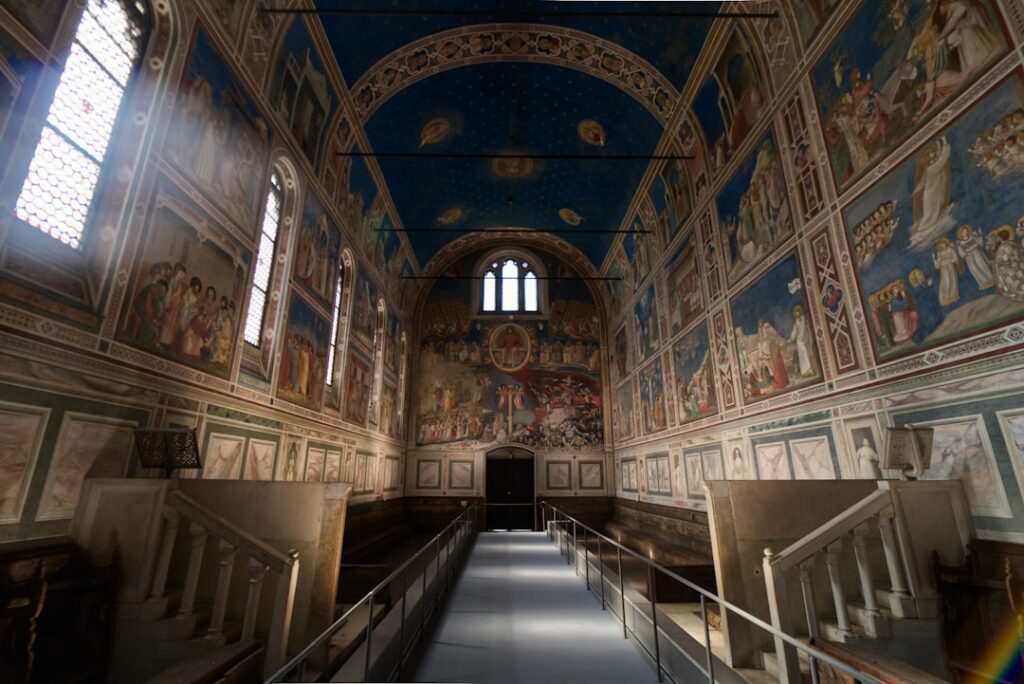
Practical tips for the visit: arrive 20–30 minutes before the time on your ticket to get through security and watch the introduction video. Entry is controlled and time inside the chapel is limited — choose the scenes you most want to focus on. Important note: photography is strictly forbidden inside the chapel; respect this rule for the sake of conservation. If you want visual documentation, buy the official booklet at the museum or download the resources offered by the online ticketing. Finally, favor visits outside peak hours (early morning or late afternoon in low season) for a more contemplative experience.
Major scenes and Giotto’s artistic innovations
In the Cappella degli Scrovegni Giotto delivers a pedagogical revolution of the image. Rather than mere sacred icons, his figures become psychologically credible actors within a staged space. The cycle comprises about 38 main scenes telling the Life of the Virgin and the Life of Christ, framed by episodes of the Passion, the Resurrection and the Last Judgment on the entrance wall.
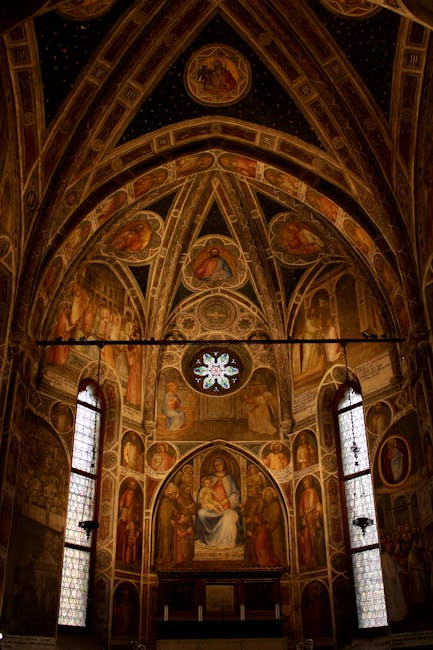
Close reading: observe, for example, the Nativity scene — the simplicity of the setting, the posture of the figures and the distribution of light guide the eye to the newborn. Giotto sets aside gold backgrounds that tended to elevate images toward a heavenly otherness, favoring a more human spirituality: perspective is still experimental, but the gradations of depth, the architectural planes and the use of shadows produce an unprecedented illusion of space. In the Kiss of Judas scene, the dramatic intensity comes less from decorative effect than from the arrangement of bodies and gazes: Giotto captures the action at the critical moment without ornamental overload.
The Last Judgment, painted on the entrance wall, is a visual apotheosis bringing together celestial figures and the damned in a choral composition. Gestures are expressive, faces tell stories: joy, terror, resignation are readable like in a visual opera. It’s this ability to transcribe emotion and psychology that sets Giotto apart from his predecessors and inspired generations of artists to come.
Observation tip: before you go in, mark on the museum plan the scenes you want to study. In 15–20 minutes, focus on three or four key episodes (e.g., the Annunciation, the Nativity, the Kiss of Judas, the Last Judgment) and take time after the visit to consult the AV room that explains symbols, colors and restoration work. Understanding the theological meaning and medieval codes will greatly enrich your viewing.
Museo Civico agli Eremitani and the Ovetari fragments: memory and restoration
Address: Museo Civico agli Eremitani, Piazza Eremitani, 8, 35121 Padova PD, Italy. The museum stands right next to the Cappella degli Scrovegni and complements the visit with exhibitions dedicated to archaeology, medieval art and fragments of works destroyed during World War II.
Hours and prices: indicative hours 09:00–19:00, closed on certain holidays; admission prices vary (often included in the combined Scrovegni/Museo ticket, or €5–€10 for a separate visit). Check exact hours and combined rates on the Comune di Padova official site before you go.
Immersive description: the Museo Civico agli Eremitani preserves fragments of the frescoes from the Oratorio degli Eremitani, including the so-called « Ovetari » cycle — major works made by artists of Giotto’s generation, some attributed to him or his workshop. These frescoes were badly damaged in the 1944 bombings; the museum today displays the rescued pieces and digital reconstructions. Walking through the museum’s rooms is a confrontation with the fragility of artworks and the necessity of conservation efforts.
Practical tips: combine your visit to the Cappella degli Scrovegni with the Museo Civico to contextualize Giotto’s work within Padua’s artistic output. Museum staff often provide multilingual brochures and explanations on restoration work: ask questions, learn about the techniques (strappo, consolidation) and note the schedule for themed guided tours, sometimes offered in foreign languages.
Other Giotto-related stops in Padua: Palazzo della Ragione and the Basilica of Sant’Antonio
Palazzo della Ragione (Palace of Reason): Address: Palazzo della Ragione, Piazza delle Erbe, 46, 35122 Padova PD. This vast medieval hall overlooks the market square and houses an incredible painted ceiling. While attribution to Giotto is debated, the building and its paintings provide essential context for understanding Padua’s visual culture.
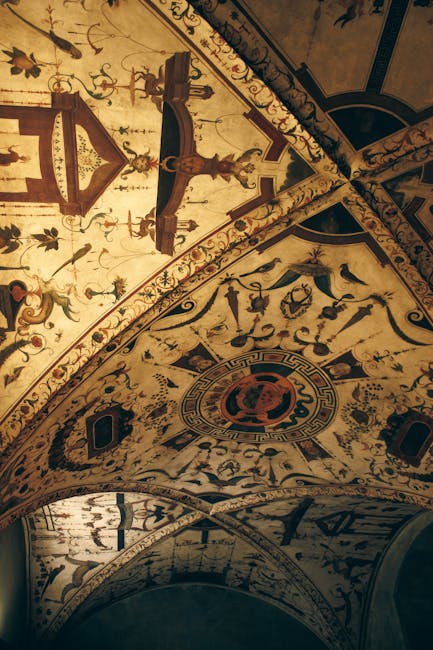
Hours and prices: generally open 09:00–19:00 depending on season; admission around €6–€10 or included in combined tickets. The palace is easy to visit after the chapel to keep a chronological and stylistic logic.
The Basilica di Sant’Antonio di Padova (Basilica of Saint Anthony): Address: Basilica di Sant’Antonio di Padova, Piazza del Santo, 11, 35123 Padova PD. The basilica is a major pilgrimage site and houses works from schools close to Giotto, as well as sculpted and painted decoration that reflects the city’s artistic sensibilities.
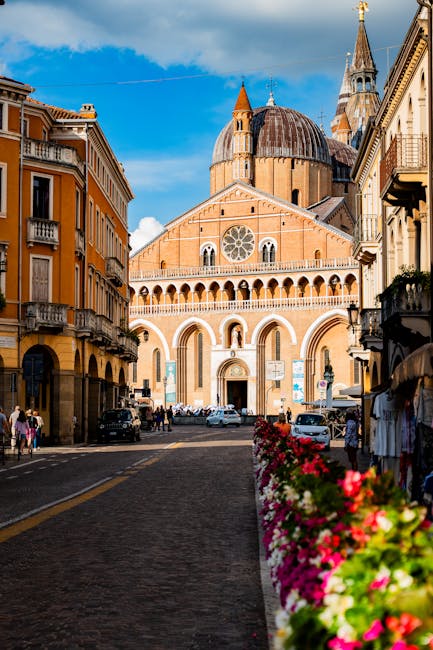
Hours and tickets: the basilica is generally open early in the morning (06:30–19:00); access is free for services, but some chapels or annexed museums may require an entrance fee (€3–€8). Tip: respect the religious character of the place (proper attire, silence), and enjoy the cloister for a quiet moment after the bustle of the center.
Practical routing tip: a 1–2 hour loop links the Cappella degli Scrovegni, the Museo Civico agli Eremitani, the Palazzo della Ragione and the Basilica di Sant’Antonio. Plan a coffee break at Caffè Pedrocchi (Via VIII Febbraio, 15, 35122 Padova PD) — a Padua institution — to visually digest the morning and prepare for more discoveries.
Local practical tips: optimize your visit, where to stay and eat
Best time to visit: avoid weekends and peak tourist times (religious festivals around Sant’Antonio, summer holiday bridges). February–April and October–November often have fewer crowds and soft light in the city. Morning: favor the earliest time slot for the Cappella degli Scrovegni for a more intimate experience.
Reservations and tickets: the Cappella degli Scrovegni requires a timed reservation. Buy tickets on the official ticketing site (Scrovegni Ticketing) to secure your slot. Many combined tickets offer savings if you plan to visit the Museo Civico agli Eremitani and the Palazzo della Ragione the same day.
Transport: from Padova train station (Piazzale Stazione, 35131 Padova PD), you can walk (25–30 minutes) or take local ACTV/APS buses. The distances between the monuments mentioned are short and the city is very walkable; bring comfortable shoes for the cobbled lanes.
- Where to eat: Ristorante Al Prato (Piazza del Prato, near Prato della Valle) for local cuisine; Osteria ai Scarponi (Via San Martino e Solferino, 19) for Venetian dishes. Typical meal budget: €12–€30 per person depending on choices.
- For coffee: Caffè Pedrocchi, Via VIII Febbraio, 15, 35122 Padova PD — a historic classic (espresso price around €1.20–€2.00).
- Accommodation: central hotels near Prato della Valle or the station, price range €60–€180 per night depending on comfort; for a more local feel, favor B&Bs around Piazza delle Erbe.
Visit precautions: respect the photography ban in the Cappella degli Scrovegni, follow conservators’ instructions (climate control, silence). Carry a bank card for online ticketing; some small shops or cafés may not accept foreign cards without a PIN.
Recommended half-day itinerary “Tracing Giotto”
Suggested itinerary (3–4 hours): start at the Cappella degli Scrovegni (morning slot around 09:00), then visit the Museo Civico agli Eremitani (1 hour) to see fragments and restoration explanations, head to the Palazzo della Ragione (visit the ceiling and halls) and finish with a stop at the Basilica di Sant’Antonio or a coffee at Caffè Pedrocchi. This loop will let you grasp the visual and religious logic that nourished Giotto.
Duration and intensity: the visit requires focus and calm; allow at least 3 hours so you don’t just skim the works. Late afternoons provide soft light for the city and façades — perfect for wandering after the visits. Bring a small bottle of water and check museum opening hours the day before.
Alternative transport: for visitors coming from Venice, the train Venezia Santa Lucia → Padova takes about 25–30 minutes and often costs less than €6–€8 in second class. There are regional tickets and day passes available if you plan to combine several museums.
Conclusion: Giotto’s living legacy in Padua
Visiting Padua to follow Giotto’s trail is a double reward: an intimate encounter with a foundational work — the Cappella degli Scrovegni — and the discovery of a city where artistic history is still tangible in every stone. Giotto didn’t just paint frescoes: he redefined how an image tells a story. His figures, their interactions, the quest for plausible space and the dramatic use of light form a new visual code that can be felt and understood here in Padua.
Beyond the immediate emotion, the visit raises crucial questions about conservation, transmission and public use of art. The protection strategy for the Cappella degli Scrovegni — limited time slots, welcome video, rules of silence and forbidden photography — illustrates the tension between cultural sharing and preservation. As a visitor, you become complicit in this effort: respecting the rules, taking time to read, listen and buy official documentation helps ensure these frescoes can be seen by future generations.
Finally, Padua invites slow exploration. Between the Cappella degli Scrovegni, the Museo Civico agli Eremitani, the Palazzo della Ragione and the Basilica di Sant’Antonio, you’ll weave a rich route blending art, history and everyday life. Take responsible souvenirs (official booklets, local editions); take time to talk with guides and conservators; and if your stay allows it, come back at dusk to see Padua light up and calm down — the frescoes will be there, safe and warm, waiting for the next visitor eager to understand why Giotto changed painting forever.