





INTRODUCTION
Padua (Padova in Italian) is one of the friendliest and most convenient cities in north-eastern Italy: full of history, a lively university scene and vibrant squares, it’s perfect to explore over a few days. To make the most of your first 72 hours — between the Basilica of Saint Anthony, Prato della Valle and the Orto Botanico (the world’s oldest university botanical garden) — you need to get comfortable with the local transport options. This complete guide focuses on your initial days in Padua: how to get here from nearby airports, how to get around the city by bus, tram or bike, where to buy the right tickets and how to organise half-day trips to Venice, Verona or Vicenza.
This guide is written for travellers who don’t want to waste time on arrival: you’ll find exact addresses, practical timetables, up-to-date price ranges and on-the-ground tips to travel with confidence. We’ll cover the train station and airport connections (Venice Marco Polo, Treviso A. Canova), transfer alternatives (shuttles, trains, buses), the urban network (operators, key stops, where to buy tickets), active options (bike-sharing, rentals, walking routes) and regional links for getting around the Veneto. Practical details — the precise address of Stazione di Padova, typical opening hours of monuments, usual fares for city and regional transport — will let you build a reliable plan for your first steps in town.
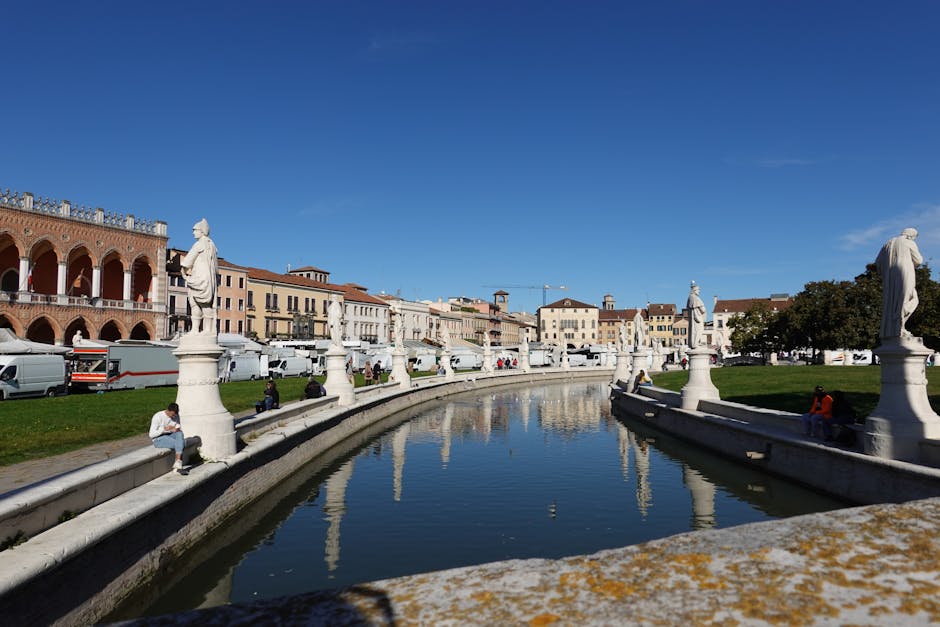
Beyond practicalities, this guide also shares local recommendations: where to validate your ticket, how to avoid ticket office queues, which neighbourhoods to favour depending on your movements, and which passes to buy (day tickets, 10-ride booklets) to stretch your budget. We’ve included visual cues and image markers at several points to help you picture the places before you arrive — squares, facades, nearby canals — which is especially useful if you’re planning your route from the airport or train station.
Finally, this guide is not just an inventory: it’s designed to be immediately useful. At the end of the read you’ll know exactly how to arrive in Padua, how to get around day and night, which options to choose depending on your priorities (speed, cost, comfort), and how to use Padua’s strategic location to explore the Veneto. Whether you’re here for a short cultural stay, business or to enjoy the Italian dolce vita, this guide will help you move efficiently and calmly during your first days in Padua.
1) Arriving in Padua: Stations, Airports and Transfers (first hours)
The main gateway to Padua is Stazione di Padova (Piazzale Stazione, 35131 Padova PD). It’s a busy railway station on the Venice–Bologna line, served by Trenitalia regional trains, InterCity services and some Frecciarossa/Italo services depending on the route. Exact address: Stazione di Padova, Piazzale Stazione 1, 35131 Padova PD. The platforms are accessible 24/7; ticket offices and passenger services usually operate between 06:00 and 20:00, while luggage storage and some shops may have different opening hours.
If you arrive by plane, you’ll mainly choose between two airports:
- Venice Marco Polo (Aeroporto di Venezia Marco Polo) — Via Galileo Galilei, 30, 30173 Tessera VE. Shuttles, buses and taxis to Padua: ATVO / ACTV / Busitalia. Travel time depending on traffic: 45–70 minutes. Shuttle fares with ATVO or Busitalia towards the main Venice stops typically cost €8–12; for Padua there are occasional direct services, otherwise you’ll transfer via Venezia-Mestre then take a train to Padova. Taxi: roughly €90–120 (indicative), depending on time and traffic.
- Treviso A. Canova (Aeroporto di Treviso) — Via Noalese, 63, 31100 Treviso TV. From Treviso, Busitalia or ATVO run shuttles to Treviso Centrale station (10–20 minutes, €1.50–3.50) and then regional trains to Padova (about 45–60 minutes, €4–7). Taxi Treviso–Padova: around €90–110.
Practical tip: if speed and simplicity are your priority, take a regional train directly from Venezia Santa Lucia or Venezia Mestre to Padova: journey time 25–35 minutes, cost €3.20–6.00 for a regionale (price varies by option). From Venezia Santa Lucia (on the Fondamenta), Trenitalia Regionale trains depart very frequently. If you fly into Marco Polo, factor in transfer time to Venezia Mestre (by bus or taxi) before catching the train to Padova.
Another gateway is the A4 motorway (Milano–Venezia). By car, Padua is accessible via the Padova Ovest exit (for the south-west approach), Padova Est (towards the university area) or Padova Centro. If you rent a car, useful parking info: Parcheggio Stazione di Padova (Piazzale Stazione), short-stay parking rates around €1.50–2.50/hour depending on the zone. Warning: the historic centre contains ZTL areas (limited traffic zones) where access is regulated and fined; always ask your rental company how to reach your hotel to avoid a ticket.
If you arrive by long-distance bus (FlixBus, Autostradale), most lines stop at Piazzale Stazione di Padova. Tickets are bookable online (fares €5–20 depending on distance and advance booking). At the station, look for information panels and kiosks to top up a card or buy a single urban bus ticket.
2) Padua’s Urban Network: Buses, Light Tram, Tickets and Passes
Padua’s public transport system is mainly buses and regional services. Local operator: buses are run by APS/Busitalia and other companies integrated into the regional network. The central hub is Piazzale Stazione; other important stops are Prato della Valle, Piazza Cavour, Piazza Garibaldi and via VIII Febbraio (near Caffè Pedrocchi).
Where to buy tickets?
- Tobacconists (Tabaccheria), newsagents and kiosks around the station (often open 07:00–20:00).
- Ticket machines at the station and major stops — cash or card payments.
- Official mobile apps (search for the local operator’s app) — handy for buying and displaying a QR code.
Types of tickets and indicative prices (valid at time of writing; check updates before travel):
- Single urban ticket (100 minutes): about €1.30–1.50.
- 24-hour ticket (unlimited urban bus rides for a day): around €5–6.
- 10-ride booklet: usually €12–14 (good value for several short journeys).
- Tourist pass 48–72 hours (if available): €10–15 / €15–20 depending on the formula — may include discounts for partner museums.
Practical validation tips:
- Validate your ticket when you board on the electronic validators: most inspections are random and fines for not having proof of payment are high (several tens of euros).
- Keep your ticket until the end of your journey; you may be checked at any time.
- For tourists, the mobile app is often the simplest method: buy a 24h or 48h ticket on arrival and avoid queues at tobacconists.
Timetables and frequency:
Urban buses generally run from 06:00 to 21:00/23:00 depending on the line; a few night lines operate on weekends. Frequencies may be reduced on public holidays. Regional trains to Venice, Vicenza or Rovigo run earlier and later than many urban services, making them a good option for longer peripheral journeys.
Stops handy for tourist sites:
- Prato della Valle: stop « Prato della Valle » (center of the large square) — ideal starting point for a walking tour.
- Basilica di Sant’Antonio di Padova: stop « Piazza del Santo » — address: Piazza del Santo, 35123 Padova PD. The basilica is generally open 06:30–19:30; entry to the main church is free, while some chapels or attached museums may charge €2–5.
- Orto Botanico di Padova: stop « Orto Botanico » — address: Via Orto Botanico, 15, 35123 Padova PD. Hours vary by season, typically 09:00–17:00 (earlier in low season); ticket about €6–9.
 Click here to buy a hop-on hop-off bus ticket
3) Getting Around by Bike and on Foot: Routes, Rentals and Practical Tips
Padua is perfectly suited to walking and cycling: its historic center is compact and full of shaded streets, squares and waterways. Walking is often the most enjoyable way to soak up the university atmosphere and architectural gems — from the Cappella degli Scrovegni (Piazza Eremitani, 8, 35122 Padova PD) to the Palazzo della Ragione (Piazza delle Erbe, 35122 Padova PD) and the legendary Caffè Pedrocchi (Via VIII Febbraio, 15, 35122 Padova PD).
The Cappella degli Scrovegni (Piazza Eremitani, 8) requires advance booking to see Giotto’s frescoes; typical hours: 09:00–19:00, guided-entry price around €13–15 on average — booking strongly recommended. Expect a walking time of about 15–20 minutes from the station to the Cappella, depending on your pace.
For cycling, several options:
- Local bike rental: small rental shops near the station and around Prato della Valle. Approximate rates: €6–12/day; half-day rentals available for €4–8.
- Bike-sharing / free-floating bikes: local systems may exist (check services active during your visit), with payment by app and per-minute or daily rates (often €0.05–0.15/minute, 24h packages around €8–12).
- Guided bike tours: 2–3 hour circuits are available (€20–35 per person) — a good option for a first guided overview.
Recommended routes:
- Cultural walking route (not more than 5 km): Stazione di Padova → Prato della Valle → Basilica di Sant’Antonio → Caffè Pedrocchi → Palazzo della Ragione → Cappella degli Scrovegni. Estimated walking time (without visits): 1h15–1h45.
- Bike ride along the Bacchiglione riverbank: from Prato della Valle follow the small streets and riverbanks for a green, pleasant ride — lovely at sunset.
- Green route to the Orto Botanico: Stazione di Padova → Orto Botanico (Via Orto Botanico, 15) in 15–20 minutes by bike, avoiding the busiest roads.
Safety and local tips:
- Always lock your bike with a solid lock (U-lock), especially near tourist sites and the station.
- Respect pedestrian-only areas and ZTL zones: some central streets prohibit fast cycling.
- Around the station, be cautious of bikes left on racks: choose well-visible spots near shops and busy areas.
- If you’re travelling light, favour walking: many cafés and museums are within short distances of each other.
Click here to book a 2.5-hour walking tour of Padua
4) Regional Excursions and Intercity Transport: Exploring from Padua
Padua’s location makes it an excellent base for exploring the Veneto. Main destinations reachable by regional train include Venice, Vicenza, Verona, Rovigo and Chioggia. Stazione di Padova offers many Trenitalia Regionale services. Here are practical trips, addresses and price ranges.
Padua → Venice (Venezia Santa Lucia)
- Duration: 25–35 minutes depending on the train type (regionale or regionale Veloce).
- Price: about €3.20–6.00 (standard regional train).
- Frequency: very frequent, every 15–30 minutes at peak times.
- Arrival address in Venice: Venezia Santa Lucia, Fondamenta Santa Lucia, 30121 Venezia VE.
Padua → Vicenza
- Duration: 20–35 minutes by regional train.
- Price: €3.10–6.00.
- Vicenza is ideal for a half-day trip: Teatro Olimpico, Basilica Palladiana (Piazza dei Signori, 11, 36100 Vicenza VI).
Padua → Verona (Verona Porta Nuova)
- Duration: 55–90 minutes depending on the train (regional or intercity).
- Price: €7–15 for regional/intercity trains; Frecciarossa or Italo are faster and pricier (from around €12–20 depending on advance booking).
- Ideas: Arena di Verona (Piazza Bra, 1, 37121 Verona VR) and Juliet’s balcony.
Other links and regional buses:
Busitalia and FlixBus serve Padua for intercity and long-distance journeys. For example, FlixBus runs routes to Bologna, Milan, Florence and Rome. Long-distance stops are usually at Piazzale Stazione. FlixBus fares: €5–30 depending on distance and advance booking.
Practical tips for day trips:
- Book in advance for Frecciarossa/Italo if you want to save time; for regional trains no reservation is needed but arrive early to find your platform.
- Always check schedules on Trenitalia or local apps: track maintenance can change frequencies in low season.
- For lagoon island trips (Murano, Burano), depart from Venezia Santa Lucia or Piazzale Roma and plan a full day. ACTV vaporetto single ride: about €7.50–8.00, 24h pass around €20 (indicative prices).
Click here to discover Venice with a guide from Padua
Click here to visit Murano and Burano with a local guide
Click here to discover Verona on a half-day trip from Padua
Click here to book a cruise on the Brenta Riviera
CONCLUSION
Getting around Padua during your first days is straightforward if you know where to look: Stazione di Padova is your hub for arrivals and regional connections, urban buses are frequent and cheap for inner-city trips, and walking or cycling remain the most pleasant ways to discover the historic core. Keep key addresses handy (Stazione di Padova, Piazzale Stazione 1; Basilica di Sant’Antonio, Piazza del Santo, 35123 Padova PD; Orto Botanico, Via Orto Botanico 15) to orient yourself quickly and save time.
For your first days prioritise: 1) booking or buying an airport transfer ticket before you land if possible (especially in high season); 2) buying a day pass or a ride booklet if you plan several bus trips; 3) favouring walking or renting a bike in the historic centre to soak up the atmosphere and avoid parking headaches. Don’t forget the local basics: always validate your ticket, avoid driving into ZTL areas and lock your bike.
Finally, Padua is an excellent base for day trips around the Veneto: Venice is 25–35 minutes by train, Vicenza and Verona are easily reachable for a day out. Use Trenitalia regional lines and long-distance buses if you plan to visit multiple cities. On arrival, locate the tourist offices (Ufficio Informazioni e Accoglienza Turistica) to pick up free maps and get updates on museum opening times (Cappella degli Scrovegni, Orto Botanico, Basilica di Sant’Antonio).
With these practical pointers — addresses, price ranges, typical opening hours and local tips — your first days in Padua will run smoothly: you’ll be free to focus on discovering frescoes, historic squares, legendary cafés like Caffè Pedrocchi (Via VIII Febbraio, 15) and strolling along the canals. Buon viaggio and enjoy the Padua dolce vita!